
The founder of IFS Richard Schwartz noticed a pattern over time as he worked with his clients. He realized that these clients, who could present with many different issues including eating disorders, dissociation, anxiety, and depression, would all talk about the “parts” of themselves. For example: “A part of me knows binging is bad and unhealthy, but another part can’t stop.” Internal family systems parts are the different subpersonalities that make up who we are, and this guide walks through the three main types of IFS parts: managers, firefighters, and exiles.
What are IFS parts? What is parts work?
Think of Internal Family Systems therapy, or the IFS model, as a framework, a way of viewing the human psyche. It believes in the multiplicity of our minds; rather than a unitary “I.” We all have different parts of us that make up who we are. These different subpersonalities can have different thoughts, feelings, opinions, and perspectives. They can behave in drastically different ways, and for different reasons. Most simply put, parts show up as thoughts, feelings, and sensations. IFS is one form of parts work, which is the process of developing awareness of, understanding, and building relationships with the different parts of ourselves rather than judging, suppressing, or trying to get rid of them.
Having parts doesn't mean something is wrong with you
Having different parts is not pathological or deviant. IFS is a compassionate, non-pathologizing framework. We all have different parts, and it doesn’t mean we have some sort of mental health disorder. Sometimes, there’s just a part that wants to stay with the boyfriend, and another that wants to break up. And getting to know the different parts of you and befriending them helps create more inner harmony, which in turn helps you make clear-headed decisions from a place of alignment and self-trust.
How many parts do we have?
There’s no arbitrary number, and everyone’s system of parts is different. Some people really connect with like seven parts. Others can create complex maps of dozens of IFS parts. It’s not really about ‘how many.’ The question to ask is: how can I develop a better understanding of the parts of me that come up? I tend to see themes and patterns of parts in my work with my clients. And Schwartz did too. He grouped them into the main types of parts: protectors (managers, firefighters) and exiles.
Can a part be bad?
There is no such thing as a “bad part.” All IFS parts have positive intentions. Parts are either protecting us from pain or alleviating pain. This doesn’t mean parts’ behaviors don’t have negative impacts or consequences. I’m sure several parts of you are looking into IFS therapy to make some changes. But just hold in your mind that all parts have positive intentions at their core. Parts can become limited by the jobs that they do (i.e. substance use, overworking, people-pleasing, dissociating), but they are actually so much more than that. The goal of IFS is to help parts become truly and deeply known.
Richard Schwartz has said: “Our parts can sometimes be disruptive or harmful, but once they're unburdened, they return to their essential goodness. When we learn to LOVE ALL OUR PARTS, we can learn to love all people — and that will contribute to healing the world.”
The main types of IFS parts
There are two main categories of IFS parts: exiles and protectors. Exiled parts have been hurt by trauma or other painful experiences. And then there are the protectors, the ones who step in to try and manage or alleviate the pain that the exiles carry. Oftentimes, these parts developed when you were a relatively young age.
Managers: The parts that keep you in control
Manager parts are proactive and future-oriented, always looking ahead. These 'protectors' have a motto of ‘never again’ and they have many different strategies to try and anticipate problems that will lead to painful emotions. They try to maintain control at any cost. They plan and think ahead. They are often described as responsible, productive, and achieving. But they can also be hypervigilant, anxious, and people-pleasing, scanning for potential threats and signs of disapproval from others.

Examples of manager parts
Examples of IFS parts in the manager role include:
the Perfectionist
the People-Pleaser
the Over-achiever
the Hyper-independent one
the Intellectualizer
These might sound familiar to you, and even be ways you describe your personality. Maybe you feel like this is ‘just the way you are.’ But this is not who you are, these are hard-working parts that are often exhausted by the roles they carry in order to prevent emotional pain, like feelings of inadequacy or worthlessness.
Is your inner critic a manager or a firefighter?
The inner critic is most often described as a manager part, but in fact it can also be a firefighter, which will be discussed in more detail below. Inner critics are often among the most misunderstood parts, because they are so harsh and, well, critical. But inner critic parts have the same desire to protect. If they can point out the flaws before someone else, or warn us against making mistakes, or compare us to others to try and make us better… maybe then they can prevent feelings of rejection, embarrassment, or abandonment. Our culture operates on a shame-based framework for motivation, and inner critic managers are deeply influenced by this.
Where manager parts come from
It is normal for us to have many parts. We need different parts at different times. Sometimes it’s great to buckle down and get organized and plan something. Maybe you remember a trip or vacation you planned that turned out well and allowed you to enjoy yourself. According to IFS therapist Mariel Pastor’s Unburdened System diagram, managers can be competent, creative in problem solving, and help us take a balanced approach to daily responsibilities. They can also encourage other parts and people.
Common manager roles develop from:
Children that grow up with parents who are emotionally immature and/or are critical, unpredictable, demanding, difficult to please, or emotionally unavailable
Growing up in an environment where you receive conditional acceptance and learn that love and approval depend on being good, successful, agreeable, or accomplished
Social and cultural norms that center around achievement, productivity, success, and rules about how we are supposed to be and how we are supposed to behave
Painful and traumatic experiences that manager parts learn they need to avoid so that unresolved feelings of shame, abandonment, helplessness or criticism are not relived
Firefighters: The parts that put out the pain
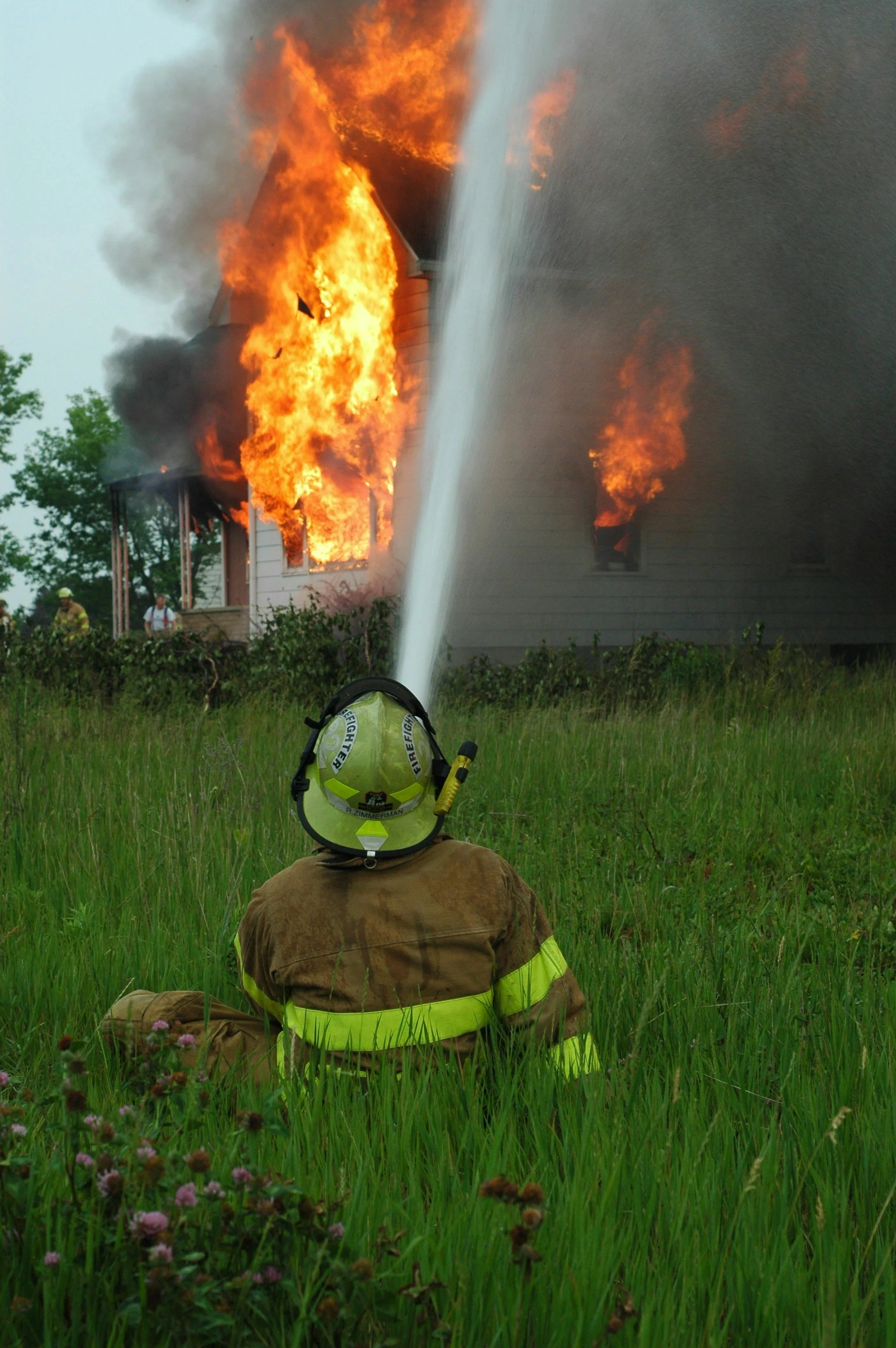
Firefighter parts are reactive and present-oriented. If managers try to prevent us from experiencing emotional pain, firefighters try to help us escape it once it's already here.They step up and do their jobs when exiles have been activated. Their primary goal is to put out the emotional ‘fire’ as quickly as possible. They are not concerned about the long term- consequences or collateral damage to their behaviors, and they react hard and fast. Think of a real firefighter going into a burning house. Are they going to worry about the water damage they are going to inevitably cause? These parts often use distraction, numbing, escape, anger, or avoidance to suppress emotional pain as quickly as possible.
Examples of firefighter parts
Examples of IFS parts in the firefighter role include:
the Dissociator
the Avoider
the Impulsive part
the “Addict”
the Perfectionistic Procrastinator
the part that lashes out
What can make an inner critic more of a firefighter is when it reacts to feelings of disapproval or rejection that have already occurred, and it rushes in to shame, criticize, and berate the mistakes with an intention to make sure that it doesn’t happen again or it stops. Firefighters are among the most misunderstood parts and often pathologized in society. IFS addictions therapist Cece Sykes wrote an excellent article on why she loves her firefighters. IFS takes a compassionate approach to these extreme roles.
Where firefighter parts come from
Firefighter parts are similar to manager parts in that the extreme behaviors they exhibit result from burdens - old emotional pain that exiled parts carry including loneliness, terror, abandonment, etc. that have not been resolved. According to Mariel Pastor’s Unburdened System diagram, firefighters can be courageous, adventurous, fun-loving, help us take healthy-risks and add spice to our lives.
Common firefighter roles develop from:
Overwhelming emotional experiences that we were left to feel all alone with and without the proper tools to metabolize it
Chronic emotional neglect and misattunement that leaves a child lonely and isolated with unmet needs
Chronic stress or unpredictability that leads to a dysregulated nervous system which can lead to numbing, soothing, or distracting behaviors
Exiles: The parts carrying the pain
IFS exile parts are our most vulnerable parts, often carrying old wounds of feeling unseen or unloved, or stuck feeling alone, helpless, ashamed, or despairing. These are the parts most of us never want to feel. And protective parts - managers and firefighters - with all their coping strategies, are the guards. Managers work hard to prevent them from surfacing. And when that fails - as life inevitably triggers these exiles (at work, in relationships, in a quiet moment), the firefighters rush in.

Examples of exiles
Exiles, the wounded parts inside of us. In my experience, these parts tend to be ‘younger’ because early life experiences, when we are innocent, naive children tend to have the biggest impact on us at a time when we are not developmentally mature and can understand nuance and context. IFS exiled parts do not have to be ‘inner children’ and can develop at any time in life, and not everyone’s childhood experiences have the biggest impact on them. Specializing in childhood trauma and emotional neglect, this is usually what I work with, but I have helped folks with burdened teenage parts, young adults parts, older parts too.
Common IFS parts in the exile role are:
the grieving child who experienced loss without adequate support
the lonely child who never felt seen or delighted in
the scared child who never felt safe or protected
the unworthy child who learned that love and acceptance had to be earned
the rejected teenager who experienced bullying, exclusion, humiliation, or abandonment
the heartbroken young adult who carries unresolved grief from a painful relationship
the overwhelmed adult who experienced a recent layoff and carries feelings of terror, helplessness, or a lack of safety from that experience
Where exiles come from
These parts can carry wounds from both major traumatic experiences and seemingly ordinary but repeated relational experiences. These parts are not inherently broken or damaged (though protectors are often afraid that this is true). They're vulnerable parts carrying burdens they haven't had the opportunity to process or release.
Protective parts do everything to prevent or suppress exiled parts, because they cannot help them heal. Exiled parts can overwhelm the system and there is often fear that “I will feel this way forever” or “I won’t be able to handle it or survive these feelings.” But these exiles are the parts of our story that need to be seen, understood, and met with compassion. And when they meet our Self, this can happen.
What is Self in IFS?
Just as Richard Schwartz noticed how often his clients described their parts, he also had a revelatory discovery. That when he was curious, open, compassionate, and treated protectors with respect and understanding, someone ‘else’ would come out in sessions. Clients would describe feelings of their own curiosity and openness toward their own parts, and they would tell him it was “just me” and “not a part” when he asked which part this was. When this happened, clients began to work with their parts in new ways. And they knew just what to say and do and how to help heal their exiles. He decided to call this “me who is not a part” Self (some people call it the true self or core self). He learned that Self is not cultivated but naturally innate, and that every person has Self. Self just becomes hidden when IFS parts become burdened and blended. Think of the sun in a blue sky above dark clouds. It is always there, even if you cannot always see and feel it. Working with a good IFS therapist will help you unblend from your parts and access your own Self-Energy.

The 8 Cs of Self
Self - or Self-energy - has eight qualities: Curiosity, Compassion, Calm, Confidence, Courage, Creativity, Clarity, and Connectedness. (An unofficial C is also Choice). Parts help other parts cope; Self helps parts heal. When Self is in the lead, it flows easily between various parts and listens to them. Self is “grounded in the present and embodies mindfulness,” Mariel Pastor said. Self can hold a much wider, broader perspective than any singular part and make clearer decisions from this viewpoint. When parts trust Self, they can be comforted and healed, and Self can speak for them. When we can speak from Self and not from a part, we are much more easily understood and can avoid heightened conflict and strife within ourselves and with others.
How to tell the difference between a part and Self
We are always somewhat blended with our parts, and that’s normal. Self is more on a spectrum, and having a critical mass of Self is all that is needed in order to heal and live a Self-led life. All IFS parts have Self-energy as well, especially when they are unburdened and released from their tiresome roles. One of my favorite mantras in the IFS community is “Self led, not Self instead.”
Parts do have strong agendas. They want a certain outcome to happen, and are usually trying to control the situation to make that happen. So a part can be curious, but curious ‘in order to get this part to step back and let me heal.’ Self does have an agenda to heal, but it’s a loose agenda. Self naturally exudes the 8 C’s and is inherently curious and compassionate.
How to start noticing your IFS parts
An IFS therapist will help you notice your parts and work with blended parts, and it is much easier to have someone to help you, especially in the beginning.
There are also things you can do to start to notice your parts on your own, it just requires getting even a little bit curious about your inner world. Parts mapping is the process of identifying and getting to know the different IFS parts in our internal system, including their roles, relationships, fears, and the ways they interact with one another. You can use words, symbols, images found online, or drawings to represent these parts. The Internal Family Systems Workbook: A guide to discover your Self and heal your parts is a great resource if you would like exercises and IFS worksheets.
Richard Schwartz has an audiobook called Greater Than the Sum of Our Parts which has guided meditations to help you meet and dialogue with your parts, such as “Getting to Know a Protector.”
When to work with an IFS therapist
If you often feel pulled in different directions and struggle with inner conflict between your thoughts, feelings, and desires, it might be time to consider working with an IFS therapist. Perhaps you've spent years trying to 'get rid' of certain parts of yourself by changing behaviors or managing difficult emotions. Hopefully, this blog has helped you understand why those approaches haven't always worked. IFS goes beyond traditional talk therapy and is an experiential approach to your inner world, which is a necessary component for memory reconsolidation. IFS can also help you heal from complex trauma, emotional neglect, perfectionism, emotional overwhelm, and intellectualization.
How long does IFS therapy take?
There isn't a set timeline for IFS therapy. Each person's inner system is different, and the pace of therapy depends on a number of factors:
the experiences you’re carrying
the protective roles your parts have taken on
how much time is needed to build trust and safety within your system
Some people notice meaningful shifts relatively early, while others benefit from longer-term work. Rather than rushing toward a particular outcome (sounds like a manager part, right?), IFS honors the pace of your protective and exiled parts and allows the work to unfold as trust develops.
Is IFS evidence based?
Yes. As of November 2015, IFS was listed as an evidence-based practice in the National Registry of Evidence-based Programs and Practices (NREPP). Research is still growing, and the IFS Institute shares current studies on its research page. You can learn more on my IFS page.
Ready to meet your parts?
Your IFS parts have stories, reasons for being here, and often good reasons for doing what they do. If you’re ready to develop a new relationship with yourself and get to the root of your issues, book a consultation call with me to see if we’re a good fit.